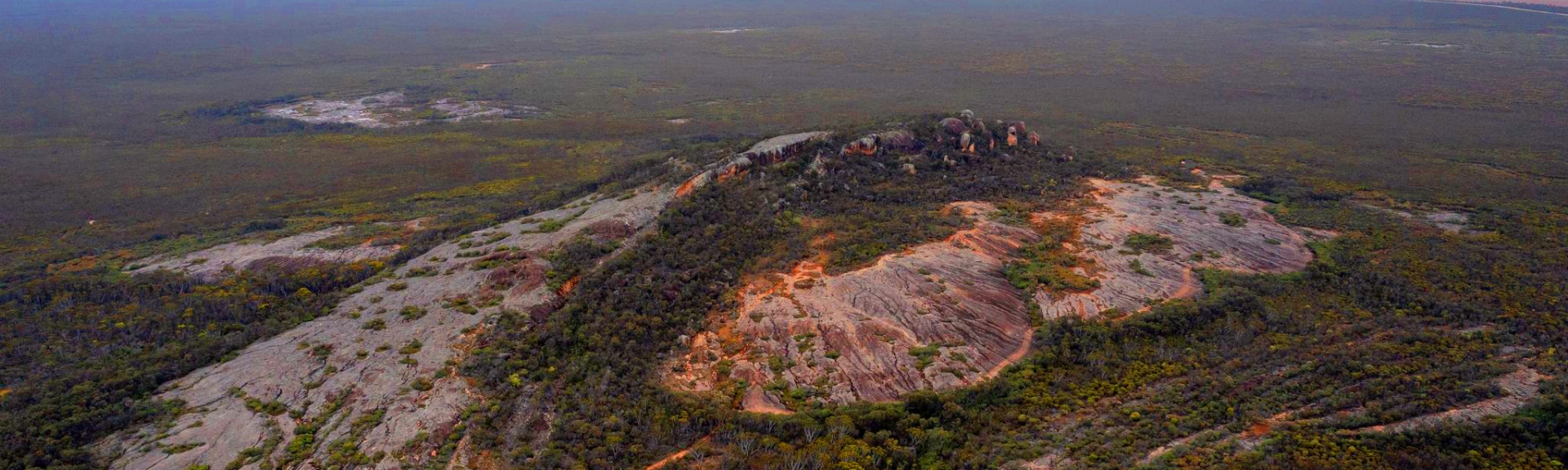

A Large-Scale Critical Minerals Opportunity in Western Australia
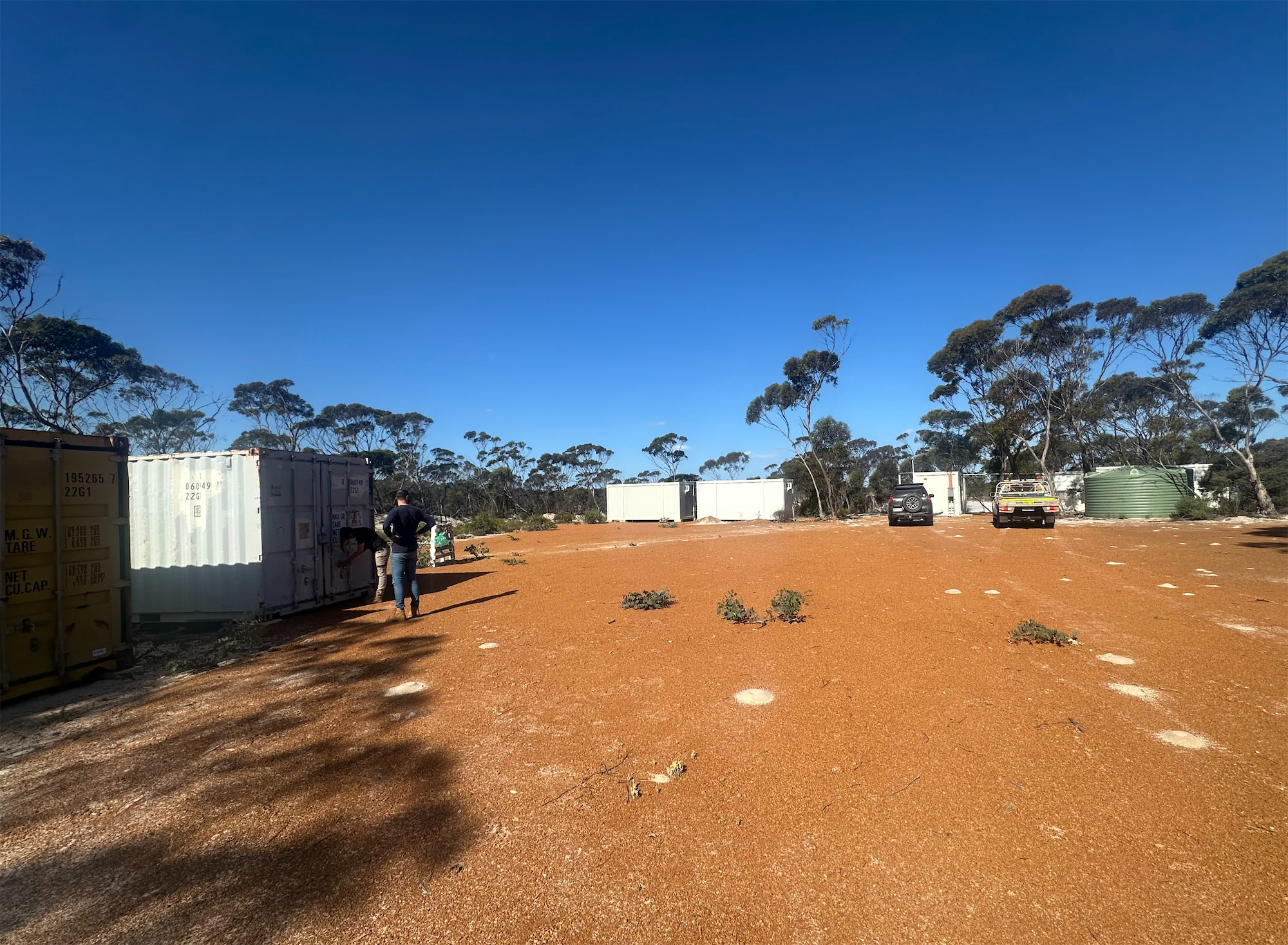
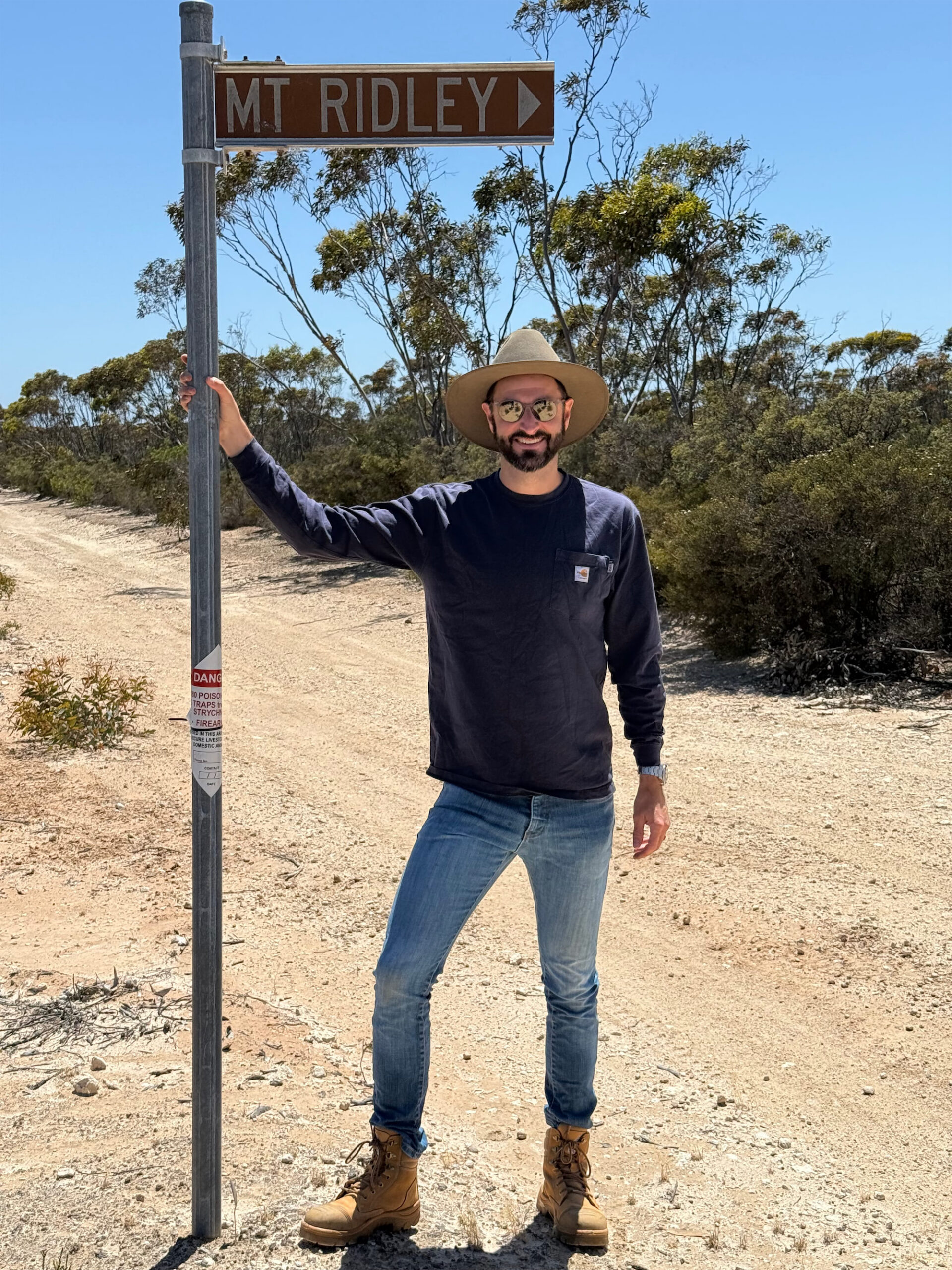
The Mount Ridley Project is a large scale critical minerals opportunity located just north of Esperance in Western Australia. The project contains extensive and shallow clay hosted rare earth mineralisation with significant gallium and scandium potential, positioning it as an emerging future facing asset in a globally important mining jurisdiction. With strong infrastructure access, a growing geological footprint and multiple high priority targets the Mount Ridley Project represents a compelling opportunity to support accelerating demand for critical minerals essential in defence, electrification and clean energy technologies.
Highlights
- Full control of the entire Grass Patch Complex
- Large-scale Gallium Resource: 838.7 Mt at 29.3 ppm Ga
- Established Mia Rare Earth Resource
- Heavy REE, magnet REE and scandium enrichment across multiple prospects
- Near-surface clay-hosted mineralisation suitable for simple processing
- Located 25 kilometres from the Port of Esperance
- Seventy to eighty percent of the district remains untested
TARGETS:
Gallium / Heavy Rare Earths / Magnetic Rare Earths / Scandium
LOCATION:
Esperance Western Australia
DEVELOPMENT STAGE:
Advanced Exploration (Gallium and REE mineral resource estimates defined)


3 World Class Critical Mineral Assets Within Single Regolith Profile
Rarely does a single regolith profile host three independently defined, world class critical mineral assets. At the Grass Patch Complex, Heavy Rare Earths, Scandium, and Gallium are uniquely colocated, creating a strategically significant multi-element system with compelling potential for integrated development and extraction efficiencies.
A UNIQUE CONVERGENCE
Heavy Rare Earths, Scandium, and Gallium are independently defined yet spatially coincident at the Grass Patch Complex, enabling potential combined extraction efficiencies.
Heavy Rare Earths (HREE)
- JORC (2012) compliant inferred MRE of 122.5Mt @ 889ppm TREO
- 108,954t contained REO metal
- 41% HREO composition
- 46,810t contained HREO metal
- Key elements: Dy, Tb, Y
Scandium (SC)
- JORC (2012) compliant inferred MRE of 367.98Mt @ 57.2ppm Sc (87.9ppm Sc2O3)
- 18,555t Scandium
- 28,920t Scandium oxide
- One of the largest scandium resources globally
Gallium (GA)
- JORC (2012) compliant inferred MRE of 838.7Mt @ 28.3ppm Gallium
- 24,584t contained Gallium
- Strategically significant given Chinese export restrictions
Mount Ridley’s Flagship Project
Strong Upside Across Gallium, Heavy REEs and Magnet REEs
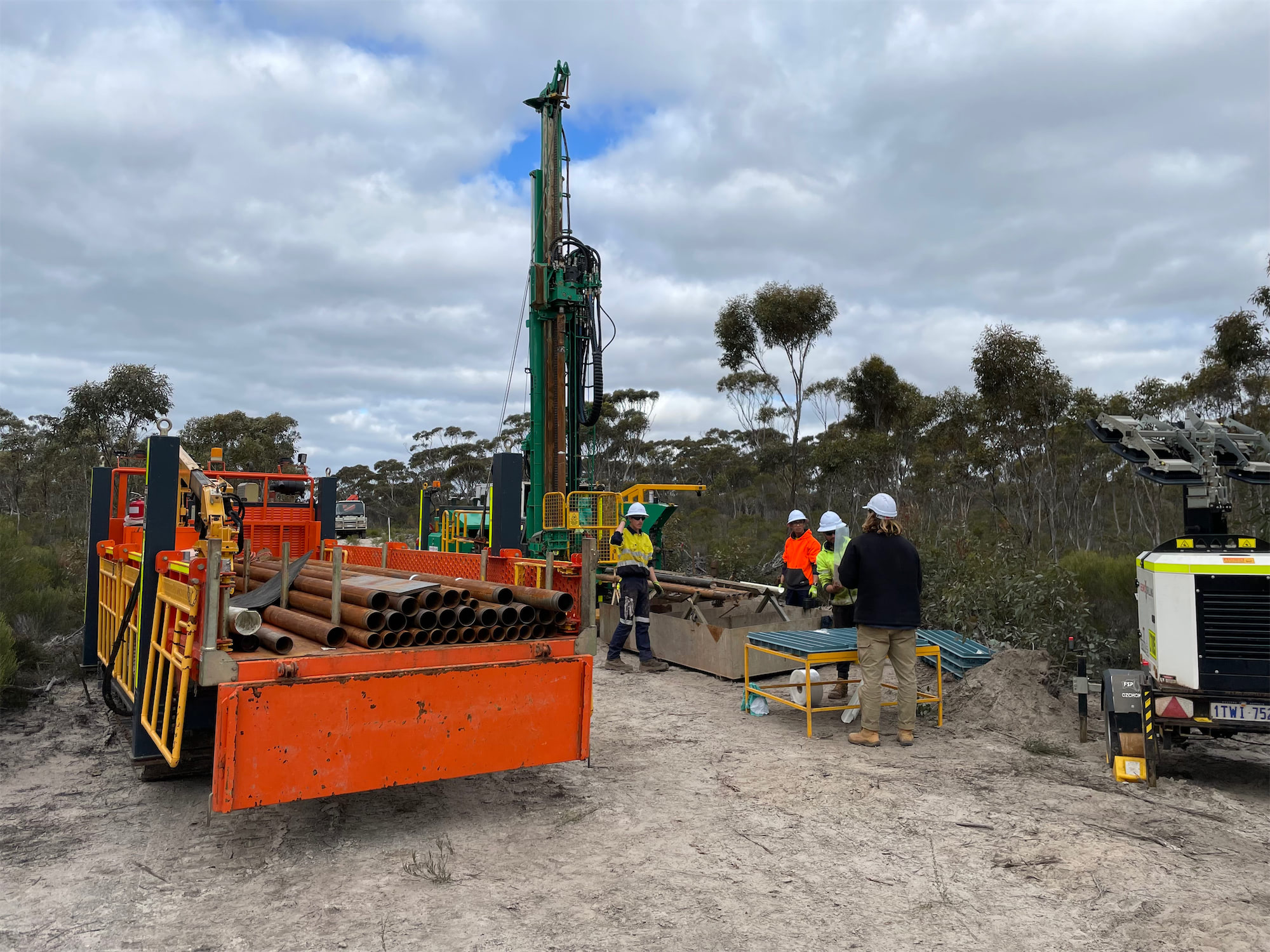
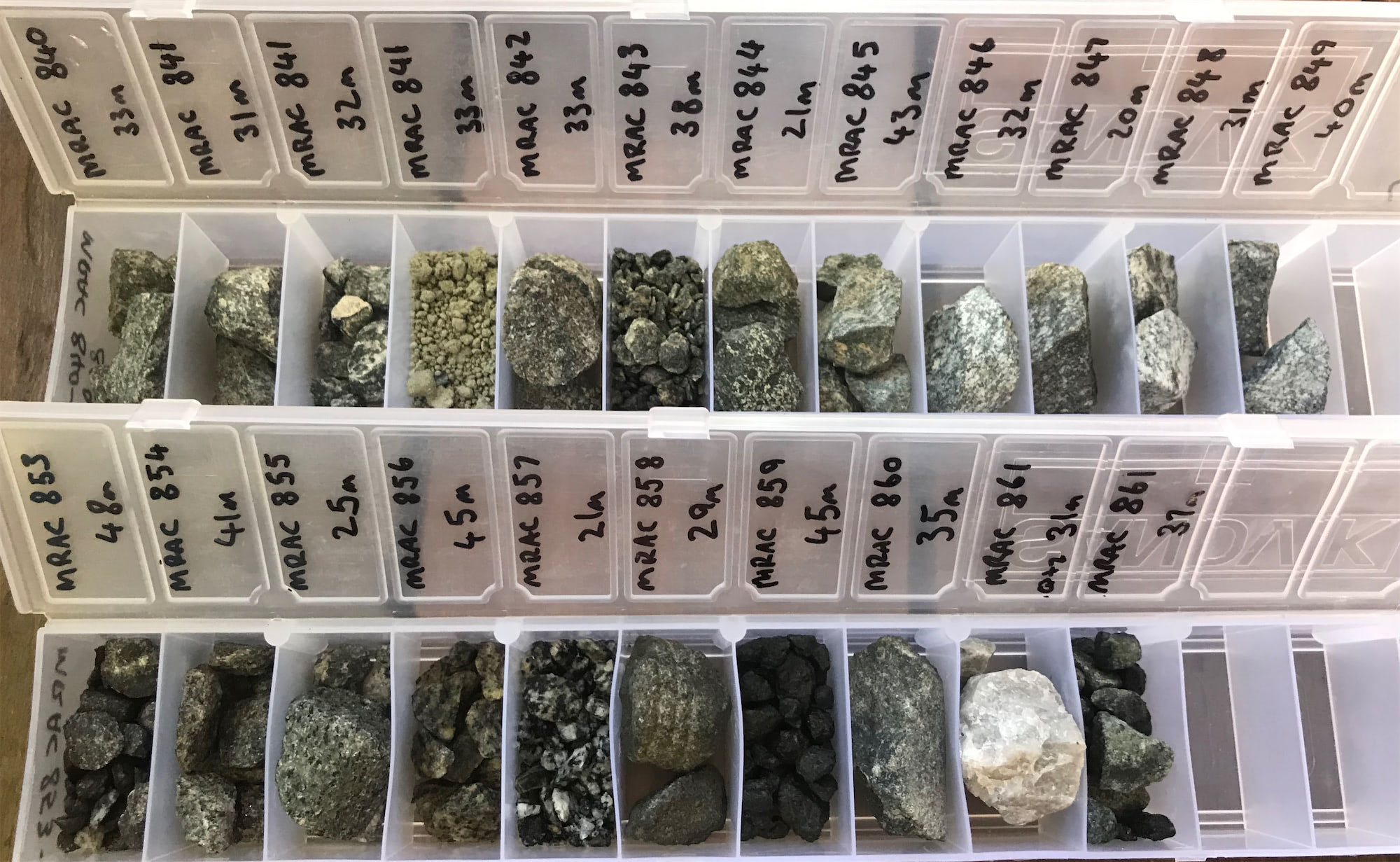
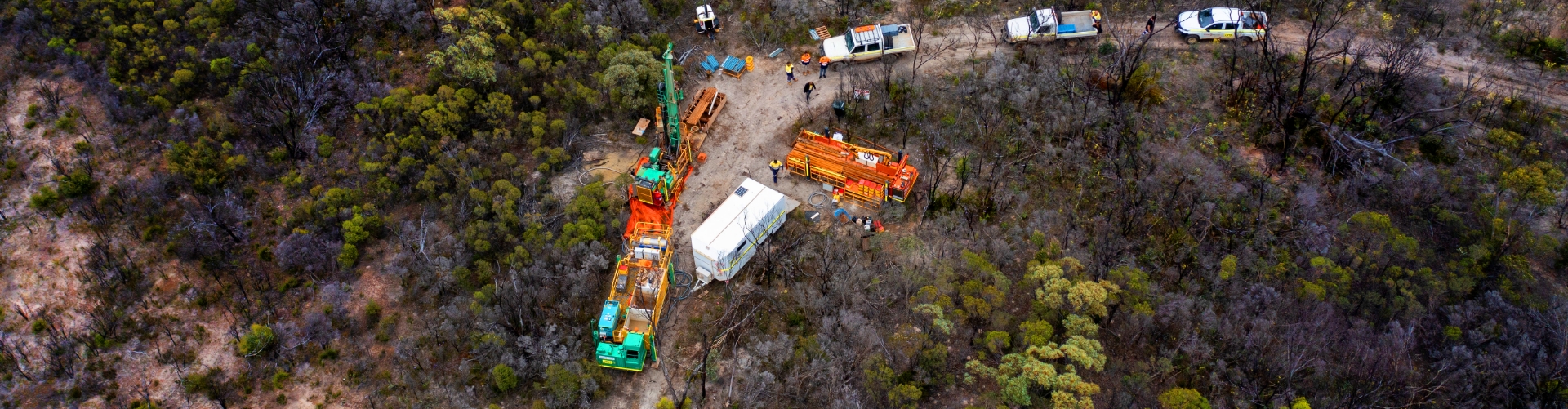
The Mt Ridley Project hosts a large, district-scale critical minerals system containing both rare earth elements and one of Australia’s largest emerging gallium resources. A major review of historical drilling has defined substantial gallium mineralisation across three broad zones, with almost 840 million tonnes identified to date and ~80% of the terrain still untested. Rare earth enrichment is widespread across the Grass Patch Complex, with strong heavy rare earths (Dy, Tb, Y) and high-value magnet metals (Nd, Pr, Dy, Tb) occurring within the same clay-hosted horizons. The Mia Prospect provides the Project’s first rare earth resource, with 168 million tonnes defined and mineralisation open in all directions.
Early testwork has shown encouraging metallurgical performance, including significant grade upgrades through simple screening and high recoveries of magnet rare earths. With proven near-surface mineralisation, favourable host clays and multiple high-priority growth corridors, Mt Ridley offers substantial upside across gallium, heavy rare earths, magnet rare earths and scandium. Ongoing exploration will focus on expanding the existing resources and testing the broader structural and geophysical targets across this underexplored critical minerals district.
Maps and Sections
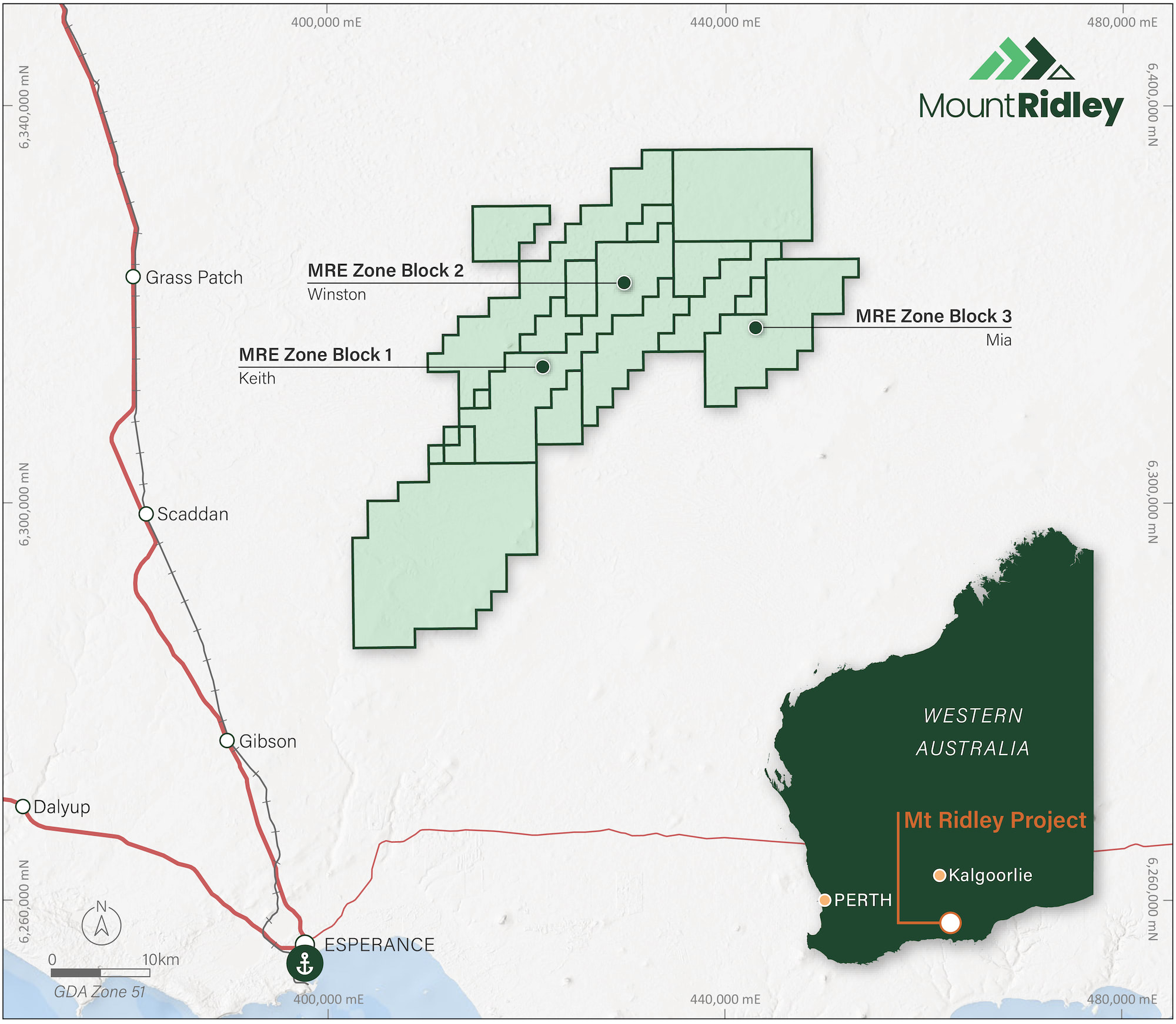

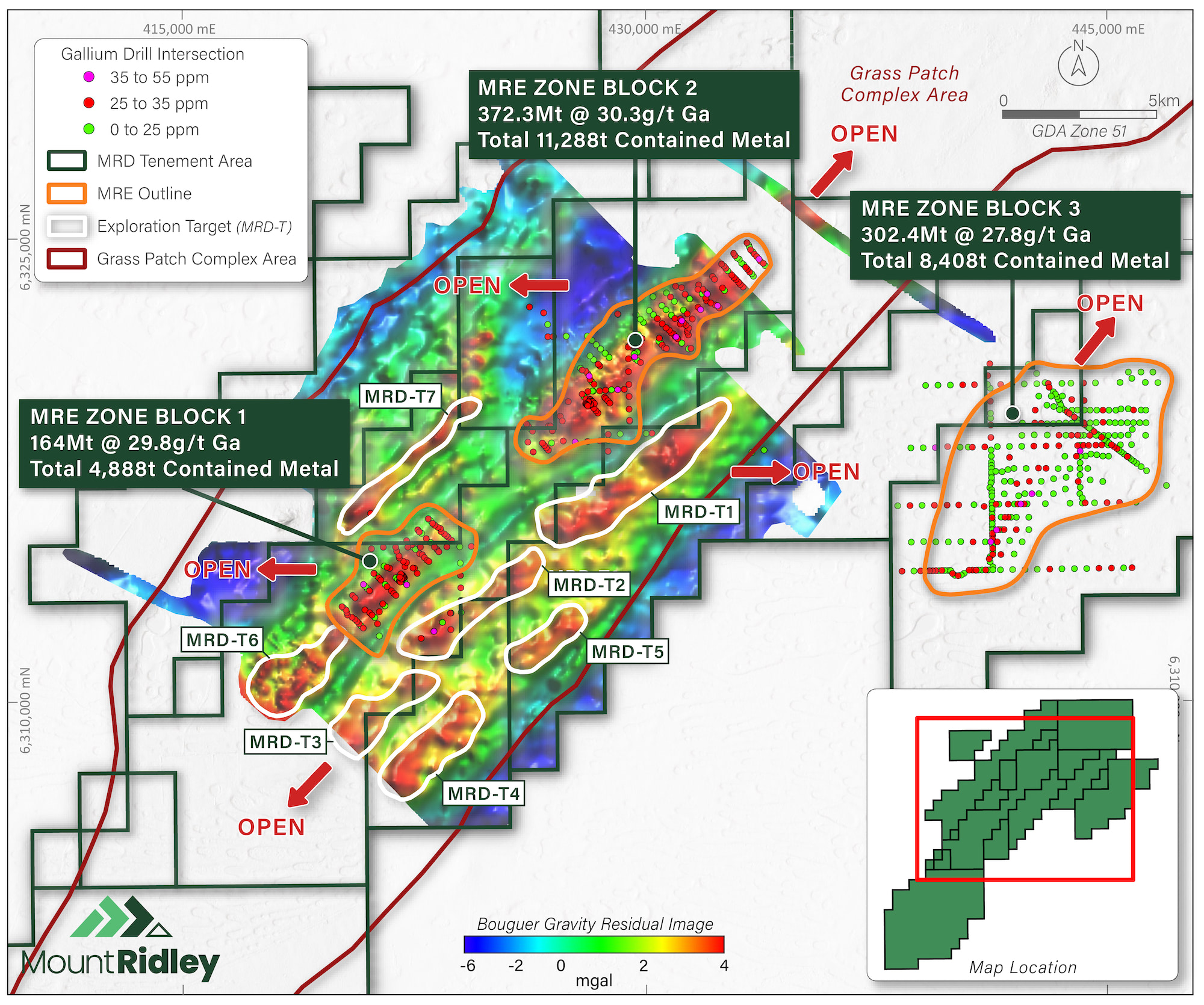
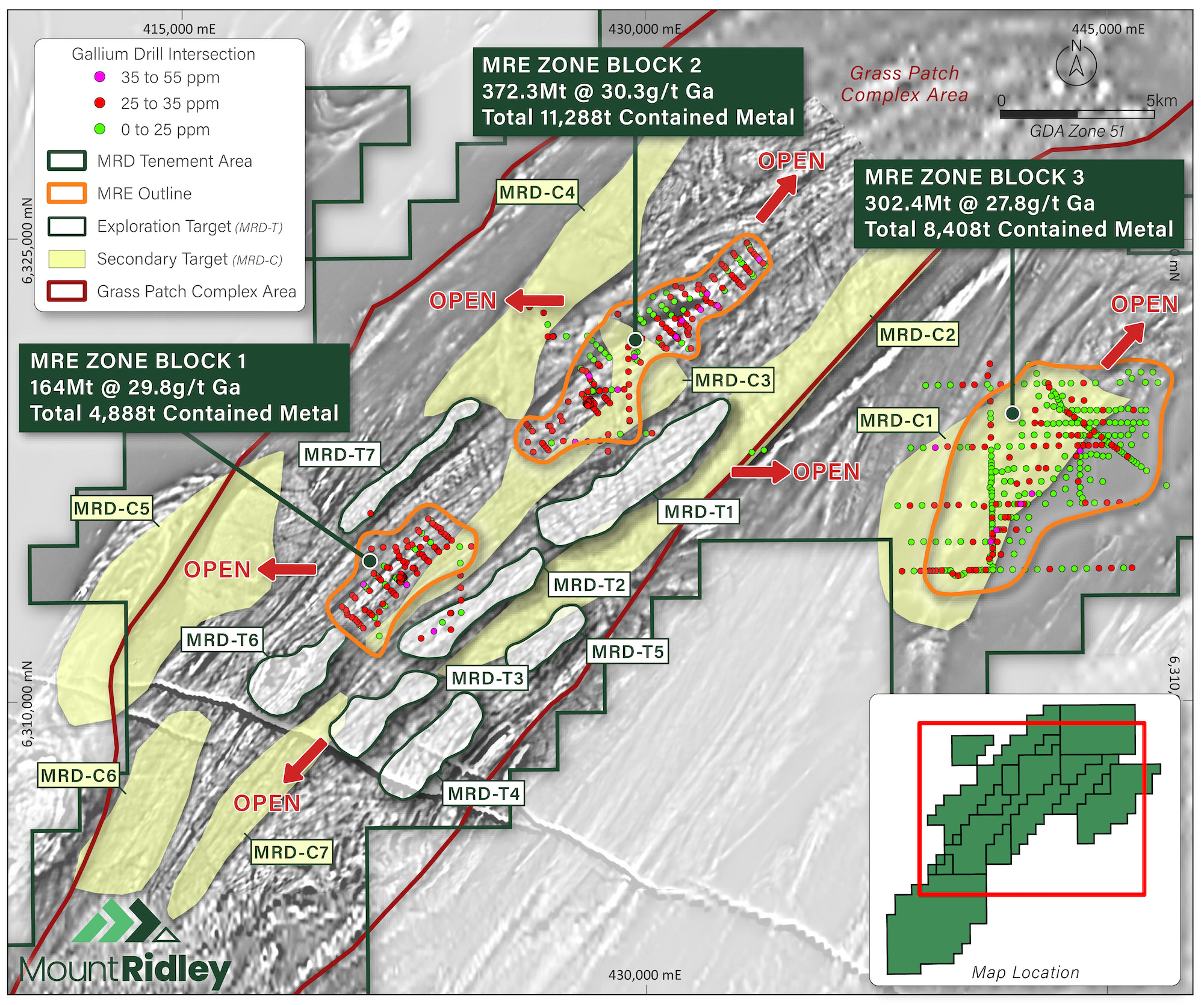
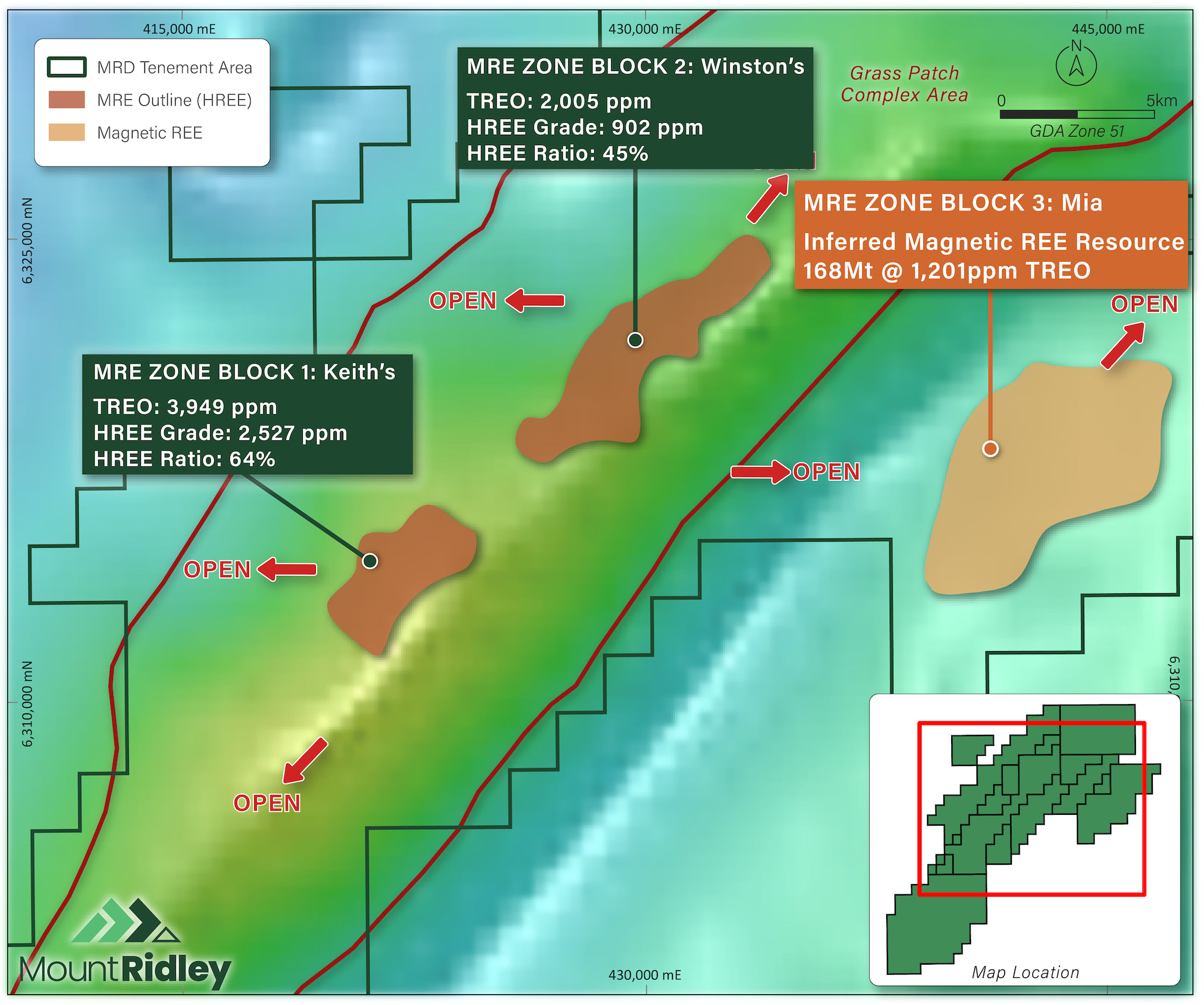
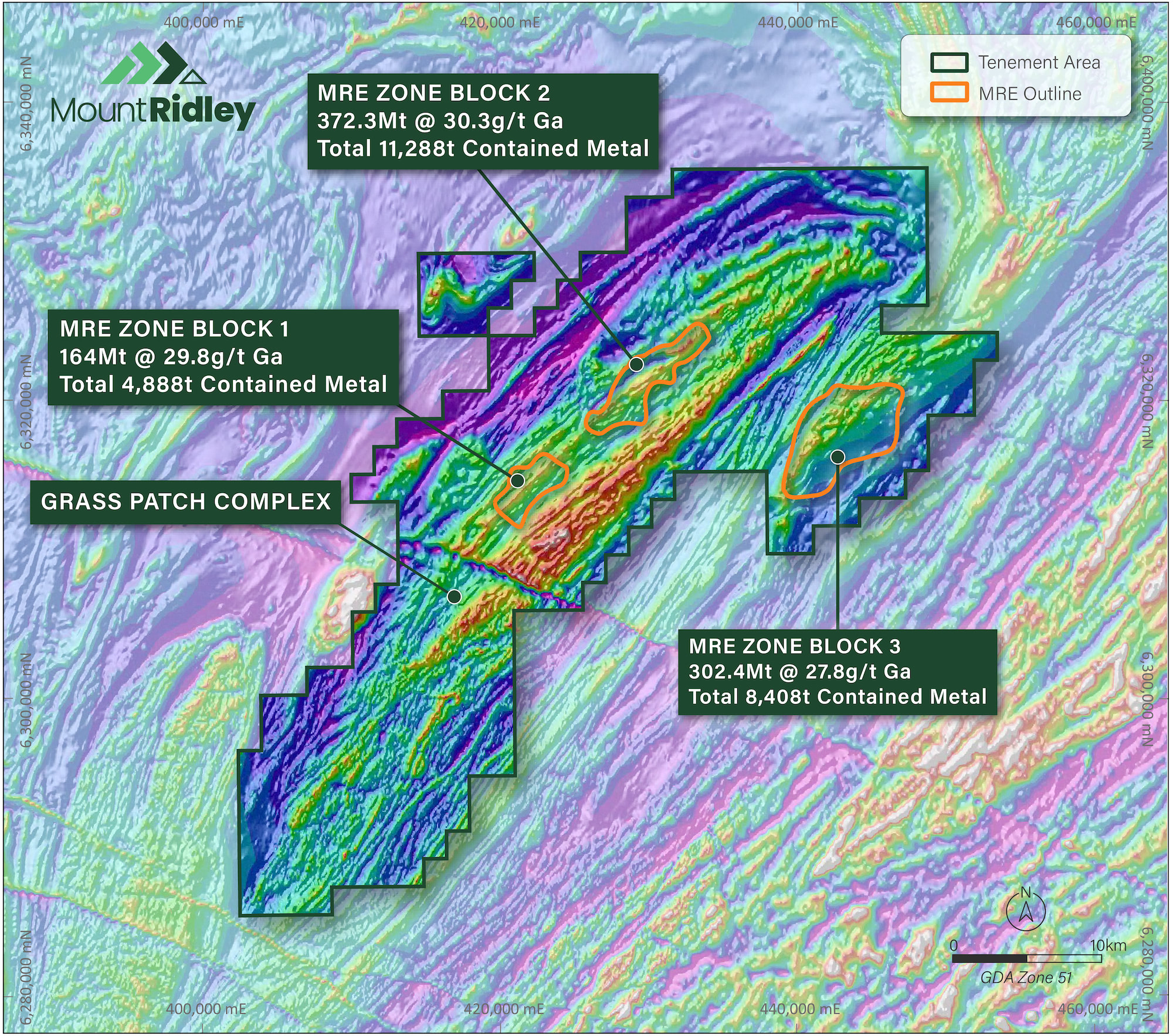

Image Gallery