
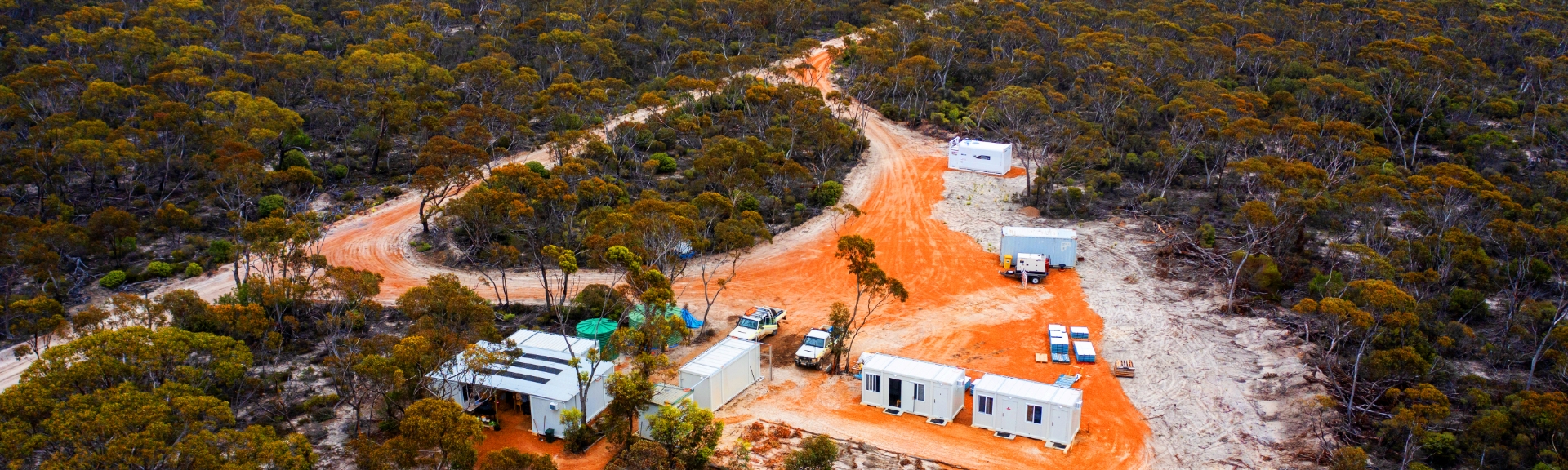


Mount Ridley Mines is an Australian exploration company focused on unlocking the rich critical mineral potential of its namesake project. With a commitment to responsible development, technical excellence and strong governance, Mount Ridley is advancing its large-scale project near Esperance, Western Australia. The Company is dedicated to building long-term value through disciplined exploration, sustainable practices, and strategic growth, supported by a highly experienced Board and Management team committed to delivering results.
Highlights
- Large-scale rare earths project strategically located just 25 km from the Port of Esperance in Western Australia.
- Significant JORC compliant mineral resource estimates confirmed for Gallium and Rare Earth Elements.
- High proportion of magnetic rare earth elements (Nd, Pr, Dy, Tb) essential for electric vehicles, wind turbines and advanced technologies.
- Shallow (< 60M) mineralisation offering the potential for cost-effective development.
- Broad project area with multiple priority targets, providing strong exploration upside and long-term growth potential.
- Supported by excellent local infrastructure, including road access and export facilities.
- Located in a stable, mining-friendly jurisdiction, with Western Australia recognised as a global leader in critical minerals development.
- Experienced Board and Management team committed to advancing a high-quality critical minerals project.


Markets
Heavy rare earth elements like dysprosium (Dy) and terbium (Tb) are critical components in high-performance permanent magnets, electric vehicle motors, wind turbines and defence-grade systems. These elements are more scarce and higher value than their light rare earth counterparts, making them strategic for clean-energy and advanced technologies.
Supply security is a focus, as heavy rare earths are sourced from limited jurisdictions and face export constraints, positioning new projects to fill an emerging gap.
Scandium is a high value strategic metal used primarily in aluminium scandium alloys and solid oxide fuel cells. Even small additions of scandium significantly improve strength corrosion resistance and weldability making it highly sought after in aerospace defence advanced manufacturing and next generation transport applications.
Global supply of scandium remains extremely limited and fragmented with no dominant primary producers. As demand grows from lightweighting electrification and hydrogen related technologies secure scalable sources of scandium are increasingly strategic positioning new projects with credible pathways to production as highly attractive in the evolving critical minerals landscape.
Gallium is a high-value critical metal chiefly utilised in advanced semiconductors, light-emitting diodes (LEDs), and emerging power-electronics technologies. It underpins next-generation infrastructure such as 5G/6G networks, AI computing platforms and defence systems.
With global demand expected to grow significantly in the coming years, while supply remains highly concentrated, the opportunity for diversified sources is compelling.
Magnet rare earths such as neodymium (Nd) and praseodymium (Pr) form the backbone of high-strength magnets used in electric vehicles, robotics, wind-energy generators and consumer electronics. Their demand is set to accelerate sharply as global electrification and decarbonisation efforts ramp up.
For supply-chain resilience and diversification, the ability to deliver high-quality magnet-rare-earth concentrates is a strong strategic advantage in the decades ahead.
History
Exploration at Mount Ridley has progressed through several distinct phases driven by market cycles and an evolving understanding of the geology. Between 2015 and 2018 the project was explored primarily for nickel copper mineralisation following the identification of large coincident gravity and magnetic anomalies comparable in scale to the Nova Bollinger system. While no economic nickel copper intersections were defined gallium was present within the historical datasets but was not considered material at the time.
Renewed interest in rare earth elements from 2021 prompted a strategic reassessment of the project. Mount Ridley re assayed historical nickel copper drill core for rare earth elements and identified multiple zones of previously unrecognised mineralisation. This led to major rare earth drilling campaigns between 2021 and 2023 initially at the Keith and Winstons prospects and subsequently at the Mia prospect culminating in the definition of the Mia rare earth resource.
In 2024 the Mia rare earth resource was announced although market response was subdued due to broader rare earth sector sentiment. A comprehensive review of the Mount Ridley dataset in recent months subsequently identified numerous historical drill holes with strong gallium mineralisation. This work together with renewed global interest in gallium has driven a strategic pivot toward gallium as a core commodity.
In late 2025 Mount Ridley completed a maiden mineral resource estimate for gallium coincident with key management changes and a renewed corporate focus on becoming a meaningful contributor to critical mineral supply into allied markets. This strategic shift is supported by the parallel development of downstream and processing initiatives aimed at enhancing supply chain resilience and capturing greater value across the gallium value chain.